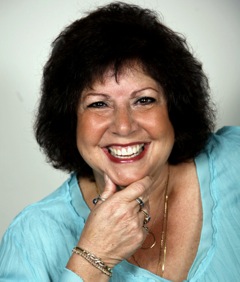
This is my little place in cyberspace, I love to read and write, so here I write about what I read. I'm not a professional, just blog about what I am reading at the moment!
The story comes out of over thirty years of treating patients in psychotherapy who are survivors of the dark side of religion…have been used and abused and cast to the side. I’ve seen that when this happens people, those around the victim, to include family and friends, often turn a blind eye and deny what has happened. Rather than writing a self help book I decided to approach this realm of human suffering in fiction. To tell a story moves the reader into a deep and unconscious dimension that bypasses conscious defenses, leaving us open to truths that otherwise would be blocked. So, dramatizing the dark side of religion, pulling what can be the most vile and evil, and pivoting it against an innocent and sincerely searching soul leaves the reader on edge, hopeful, but unsure as to what will happen and who in the end will survive…a truth conveyed symbolically and dramatically. To have written out a list of what to do or not to do in the midst of religious abuse might have helped some individuals, but would have left many people stone cold because there is no emotion is such guidance. In The Unholy, the story is pure emotion, fear and rage and hope and challenge, that inspires and frightens and causes us to stay up late at night in order to finish the story. Dream and chronic nightmares plagues people who’ve gone through the horror of being abused within a religious system. It could be emotional, spiritual, physical, or sexual torment—or all of the above—a true encounter with the unholy—that people undergo during childhood or adolescence or adulthood.
You wouldn’t think cancer would be the first thing someone thinks about when thinking of Harry Potter, but for me, it always will be.
I had not read the book when the first movie came out. It was just before Christmas 2001. At the time, I lived in Phoenix, but I was back home in Alexandria for a visit.
My father was ill, having had a stroke earlier that year. Being home was hard, and seeing him like that was surreal. I had an escape though—my friend, Cameron. Cameron was one of those guys that it took me too long to figure out just how wonderful he was.
We met in seventh grade French class. My mother met his mother the night before, and she made a point of telling me that Cameron and I should be friends.
When I saw him, I disagreed. While he was always handsome, he had a quirky fashion sense that I did not get. It was middle school, and I was trying so hard to fit in. He didn’t seem to mind standing out though, and he was always wearing this ridiculous trench coat. We became friends.
To this day, I’m not certain that I have ever known someone as truly sweet and generous as Cameron was. I say was because Cameron died. That’s where the cancer comes in. I’ll get back to that.
At the end of and after high school, I was in an extremely toxic and abusive relationship. During one of our breakups, I went out on a couple of dates with Cameron. Looking back, I wish I had been ready for him, but I wasn’t. My head was not in the right place to deal with accepting my attraction to the guy with the mohawk when I was still all messed-up over a guy who was nothing but a thug. Cameron was too different.
I moved away, and when I came back for a visit, we went on another date. He took me to the little Chinese place next to where the Blockbuster was. Over dinner, he told me he had cancer.
He learned this during his freshman year at a college. He kept having stomach pains and went twice to the student clinic, only to be sent away with painkillers.
The next time, his mom told him to go to the emergency room. They found a tumor.
I remember being shocked over dinner but not scared. Nobody I knew had died of cancer. He would be fine.
We kept in touch while I was in Arizona, talking on the phone maybe once every couple of months. Just as I suspected, the cancer went away. He beat it. He even went back to school and worked up the nerve to ask some girl out. I was jealous.
He never got a chance to go on that date. The cancer came back, and he moved back home to Virginia.
The next time I saw him was December 2001. He looked different but not bad. We went to see Harry Potter and the Sorcerer’s Stone. He had already seen it, but he took me anyway.
That was his way, always looking out for me. We swam together during high school. I remember my coach wanted me to join this other team. I was scared because I wouldn’t know anyone. Cameron decided to join too.
He looked at me, so serious. “We’ll carpool.”
And then, through that awful relationship, I remember him putting his hands on either side of my face, trying to convince me I deserved better, wanting to beat up my ex for hurting me.
That December in 2001, I was home one week, and I saw Cameron three times.
I was busy when I first got back to Arizona. I didn’t call him right away. When I did, it was just after New Year’s. He was in the hospital. I spoke to his younger brother. He told me Cameron overdid it when I was in town. I didn’t know.
Cameron called me when he got out of the hospital. It was the first time I actually considered that he might die. I remember saying that he couldn’t die, that I was putting my foot down, like I had any power. I made him promise me he wouldn’t die, and he did. He promised. When we hung up, I was certain he would beat it again. That was the last time I ever spoke to him.
When my caller ID flashed his name, I answered all happy and excited to talk to him. But it wasn’t him. It was his dad.
The second he said, “This is Cameron’s dad,”I knew.
We didn’t talk long, and I honestly don’t remember anything after he said, “Cameron is gone.”
At the time, I was a smoker. I went out on my front porch to cry and have a smoke. I lived in Phoenix. It never really got windy unless there was a monsoon, which between you and me, I never understood what the big deal was. It was just rain. It rained all the time in Virginia. Either way, it was windy, really windy, and there wasn’t a monsoon. It felt like Cameron was coming to say good-bye, using the wind to wipe the tears from my face.
After that night, I began to associate wind with feeling Cameron’s presence. I would lie in bed at night and turn the ceiling fan above my bed to the highest setting to imagine it was him. He was the wind.
Harry Potter helped me grieve. It gave me time to rest in my memories of Cameron. I bought each book as they came out and saw each movie.
When the second movie came out, I went by myself on opening weekend. It was packed, standing in line with little kids dressed up as wizards. I had people, strangers really, sitting on either side of me. They probably thought I was off when I sobbed through the opening credits. I just wished Cameron were there with me. That familiar opening melody broke my heart.
By the third movie’s release, I had a boyfriend. We were pretty serious, but he understood why I went to that movie alone. I told him about Cameron. When we became engaged,he started to come with me. He would hold my hand while I cried.
The last two movies were hard. The books were all out. The end was in sight. During Harry Potter and the Deathly Hallows: Part 1, I came close to inflicting bodily harm on the people sitting behind me who were laughing during that scene at the end with Harry and Dobby on the beach. Didn’t they know? Couldn’t they understand these movies, this experience, meant so much to me? The last movie was the hardest for me.
I am now married to a wonderful man, andwe have beautiful children. I understand how blessed I am. I mourn the what-if with Cameron,and even if nothing had ever come of us, I feel sad every day because the world lost such a beautiful soul.
So, for me, Harry Potter will always make me think of Cameron and the cancer that took him away.
The Single Most Important Step to Building a Blog Community [EReadingOnTheCheap.com]
Community has got to be one of the top buzzwords of the social media era.
Companies are working hard to create them, we all want to belong to them, and they’re the holy grail of engagement for bloggers everywhere.
According to many, if your blog is a platform for a vibrant and active community, then you’ve hit the jackpot. You’ve arrived. Except, that most people haven’t. Most blogs don’t host vibrant and active communities… hell, most blogs don’t get read at all!
Usually, it’s because they’re missing a critical secret ingredient, without which the community is never going to form...
The Basics of Community
So what are the foundations of a community?
At its most elemental, a community requires two things:
A topic of shared interest.
Other people.
You can’t build a community on the idea that you’d like to have a community – there needs to be something to talk, think and interact about. You should already have this under control, of course – you’ve chosen your blog topic for a reason. You’re interested in it and have at least a suspicion that other people will be, too.
Now of course, you just need to find those people, which you do through social networking, forums, other blogs, and so forth, and you need to give them something on that topic of shared interest on a regular basis.
But is that enough? If you combine people with information related to their shared interest, will you have community?
Not quite...
The Missing Ingredient
A blog becomes a community when it moves away from being the place where people come to hear what you have to say, and start talking to each other about what you said.
That’s right – the key to a real, thriving community is conversations that you aren’t necessarily a part of (although you should try to be a part of them, if at all possible).
The content that you produce has to do more than convey information. It has to make people want to talk about it, regardless of whether you are there to hold their hands while they do.
You don’t necessarily have to have an actual “forum” for this to happen, just make it easy for people to comment on and share your posts.
It Just Takes One Spark
This won’t happen all at once, so be prepared to really nurture this communication in the beginning. Respond to every comment, and straight up ask for engagement at the end of your post. Ask a question, make a galvanizing statement. Be controversial. Piss someone off.
In short, make it irresistible for your readers to comment, share and engage with you. It only takes a few repetitions for an action to become a habit... so help them make interacting into a habit!
When people visit your blog without ever commenting, they do so because they are in the habit of being passive consumers of your content. You can help them change that habit and expectation into something more like: “When I read BLOG X, I comment.”
Look at the Huffington Post – most of their articles generate comments in the hundreds because their readers are in the habit of responding to the ideas and viewpoints they find there. And you can do that, too.
Ask for the engagement, and then reward it with your full attention by responding to every comment. In time, people should start taking some of that responsibility off your shoulders.
Many Paths, Many Examples
The ideas listed above are just a handful of the possibilities. There are as many ways to create the “spark” that turns your blog into a community as there are bloggers creating communities.
What will end up working for you and your audience may not be direct questions or inflammatory statements – it might be new ideas, contests, local or national interest, responses to your offline activities, or any number of other things.
The best way to get a really solid grasp of the landscape of possibilities that are out there is to learn from the people who have actually been there and done that. Like the new book that I just co-authored with Guy Kawasaki, Brian Clark, and a bunch of other great people. Just saying. ;-)
Danny Iny (@DannyIny), a.k.a. the “Freddy Krueger of Blogging”, teaches marketing that works at Firepole Marketing. Together with Guy Kawasaki, Brian Clark and Mitch Joel, he wrote the book on building engaged audiences from scratch (available in paperback and on Kindle).
Please help we welcome guest blogger Jonathan Wutawunashe!
1. KEEP YOUR EYES PEELED
The success of every animal in the food chain depends largely on its credibility. The roar of the lion, the size of the elephant, the athletic profile of the cheetah-all would be meaningless if they did not correspond to the big cats’ ability to act devastatingly to the disadvantage of their prey. A roaring wimp, a lethargic giant or a limping sprinter can be assured of minimal impact on the eco-system.
So it is with humans. While, on balance, our primary preoccupation is not predatory (this point, I know, is hotly debatable), the same principle that governs things in the jungle holds for us too in the different kind of jungle in which not only we, but our hopes and dreams too, must survive and succeed. We must fulfill our threats if our impact on society is to be meaningful.
Fifty-plus years of sometimes difficult life have taught me a few lessons that I am sure others have learnt over a longer or a shorter time. Among these, one that I have found the most motivating is about the principles that govern an individual’s ability to realize his or her potential in any area of human activity. My reading of history, university training in human behaviour, experience in international affairs, engagement with the arts and with business, family life and the successes and failures I have encountered in my own life have combined to convince me that the character of our participation in the processes of life has a direct bearing on outcomes
In this my first book, I offer the thesis that success is the outcome of a simple process based on deciding, doing and learning. These activities are locked in a sequential loop that can be linear or non-linear depending on specific circumstances. Whatever the sequence at any point, however, one element is constant, and that element is you. You take the decision, you do the things you have decided, and you learn the lessons that are necessary for you to succeed. I readily admit that this is a blatant truism, but venture that too few people realize how powerful and liberating this obvious fact is. Most failures in life are failures in commonsense.
In 1981, I went to several recording studios to present material that I thought was worth recording. At one such studio, I was told that it was a waste of time to try, as there was no market for that genre of music. The producer probably thought I was throwing a futile tantrum when I vowed, in response, that not only would my music be played on the radio, but I would one day open a recording studio so that new artistes would find a friendly place where producers would at least give them the benefit of the doubt. (In the event, my band, the Family Singers, became popular trend-setters who have recorded several chart-busters and are heard in many countries of the world.) Well, I have so far opened four studios where newcomers to the industry are made to feel safe, and are given encouragement and help with their recordings. In this endeavour, I have had the help of my wife Shuvai, our son Tinashe and our daughter Tendai, who are musicians of note in their own right. Tinashe is currently studying music at a leading music university on a merit scholarship, and Tendai, who recently won the hotly contested scholarship, plans to join him soon. I hope that when they finish they will bring their enhanced skills back to our studios, or create similar ones themselves. I made a threat, and I have fulfilled it.
I remember an incident in 1962 when my father, who was then a schoolteacher, taught us a startling lesson. On some trivial pretext, one of the older girls in the school had promised to commit suicide by hanging herself from a tree. When he heard about the crisis, my father drove us in his car to the scene of the drama, where he invited the lady with the death wish and a few on-lookers to join us in the car. We then drove to a wooded area, where he identified a sturdily built tree of adequate height, and offered to assist the young lady with the practical details of self immolation. He even provided a rope that was normally used to winch the car out of the mud whenever it got stuck. Our wide-eyed horror and disbelief quickly gave way to astonished relief when the girl showed clear signs of desperation to embrace life in the face of a real opportunity to carry out the terminal threat she had issued. She made a threat that she (fortunately!) could not fulfill.
In many ways, each of our days is a tabula rasa, a clean slate on which anything can be written, or nothing at all. We are the authors, and we choose whether, what and when to write. It is the nadir of escapism and denial to blame our failure to act on our dreams on the weather, the fates or other people. Some procrastinators even claim that they are “waiting on God”, even when God is recorded as saying that they should stand firm and take action. When our daughter was two, she amused us one day when she was caught with her head in the refrigerator, her hand buried in the peanut butter jar and her face unevenly surfaced with the brown delight. With not a moment’s hesitation, she announced, “It’s Tinashe”. Never mind the fact that her brother was at school at that moment, and it was she who was speaking with a choking accent from inside the fridge! How similar this is to our all-too-frequent fudge-faced denial of any involvement in creating, through inaction, the messes we find ourselves in!
My brother Andrew stopped suddenly as we were walking down Broadway in New York City. “Jonathan!” he exclaimed. We were standing in the shadow of the Grand Marquis Marriott Hotel. “Do you know what started all this?” He paused for effect. “An idea in the mind of a man.” Over the years, I have mulled this deep but simple truth, and it has motivated me to do things I had never thought of attempting. J.W. Marriott thought it, and then did it, and that is why it stands there. As I have thought about it, my mind has been drawn to examples closer home. When I look at the Reserve Bank building in Harare, the environment-friendly marvel at Eastgate and other architectural miracles that surround us, I realize that it was the disciplined leap from thought to action that accomplished them, ideas in the minds of men and women who chose the path of commonsense and refused to let brilliant schemes go unattempted. Such people reject futility and prefer lives that carry visible meaning. They choose to fulfill the creative threats that their fecund minds generate.
Every language under the sun has a saying about learning, experience and knowledge. Indeed, it would be odd if our languages were not replete with references to the acquisition of skills and of knowledge; the moment we were born, we embarked immediately on an urgent project to supplant uninformed instinct with knowledge that was more certain, starting with the rap music- like craning of our necks that we quickly refined to a more guided search for mother’s milk. The disgusted yelp with which we cursed an unfamiliar world soon enough gave way to a more devious stratagem to gain beneficial attention whenever we grew hungry, felt lonely or disapproved of the humid fit of our nappies. Anything that is alive will continuously monitor incoming information, carefully observe the consequences of certain actions, and relentlessly adapt its environment to its requirements. The dodo dies. It is therefore of vital importance, as we seek to fulfill the threats whose fulfillment can prolong our lives, that we be voracious in seeking and using information that will sustain our chosen venture in life.
The threat of this book is to cajole, annoy and shock you into self-fulfilling action. In it, I say think, act and keep your eyes peeled. Who knows, you just might be on to something.
2. TAKE THE FIRST STEP
Most people have a problem with taking the first step in any enterprise. The basic instinct responsible for this is essentially a good one: self-preservation is the most primal, and literally the most vital of the instinctive behaviours of all living things. We are programmed to take flight when the odds are against us. However, indiscriminate flight when manifested in humans is generally associated with psychological disorder, as it appears to negate rationality, the one attribute that sets apart humankind from the world of beasts.
The whole essence of human intelligence is the ability to discriminate, to tell the difference between one set of circumstances and another. When this faculty is suppressed, anxiety neurosis sets in, and paralysed inaction is the result. Herein lies the foil to many a great venture, but at the same time a valuable clue as to what needs to be done if great ideas are to be translated into real achievements. The urge to flee from we know not what must be recognised and accosted as the front-line enemy that it is.
The first rational step in confronting a problem is to cut it down to size. Exaggeration and panic are fast friends. The story is told of a dozen spies who were deployed to stake out a city that their group planned to invade. Ten of the scouts brought back the report that, whereas the place was indeed ideal for acquisition and settlement, this would not be possible on account of the terrifying size of the inhabitants. However, the two remaining spies placed a different emphasis on their report: the place was so ideal, they said, that it would be unforgivable not to wrest it from its gigantic inhabitants.
The moral of the story is that, in any given situation, we have a choice of perspective. We can shrink from a challenge or seize the opportunity of testing our skills in tackling it, depending on the perspective we elect.
In your specific circumstances, then, once you have conditioned yourself for action by going through a "why not?" inventory, you must consciously choose to define the challenge in a manner that makes it inevitable for you to tackle it. If you have applied the inventory properly, you will have by now eliminated genuine, rational reasons for not doing what you have been dreaming of by adjusting and simplifying the concept to the point where it is actually doable. You will also have, by now, eliminated any ambiguity as to who is to do the doable, having custom - tailored the challenge to meet talents that you know you have. By now, the yellow - bellied, cop - out red herring "why me?" will have been banished by an aggressive, action - oriented "why not me?" Now you must act.
Most people have had the experience, in one social situation or another, of wanting to start a conversation with someone they are meeting for the first time. The legendary butterflies begin to flutter wildly, and an onset of the shakes is not unheard of. The body's chemistry adjusts itself for flight, and the brain's language facility appears suddenly to have abdicated its usual responsibilities. The first sound that comes out, if it does come out, is often not the one that was mentally rehearsed beforehand. What we have in such situations is a case of an irrational activation of an instinct that is meant to kick in in radically different circumstances. The antidote is to deliberately impose rationality on the situation. Talk to yourself if you have to, but bring the instinct under the discipline of your mind.
Professional athletes are often to be seen taking deep breaths and verbalizing confidence - building slogans to themselves as they "psych" up for a tournament. This is their way of disciplining potentially debilitating anxieties and fears and converting them into winning aggressiveness. There is courage within us; all we need to do is to consciously draw upon it to obliterate irrational fears we have about doing things that are indeed good for us. In the social situation discussed above, once actual action - greeting the stranger about whom we are curious - is taken, the transgressing instinct retires and the normality of the whole situation becomes obvious.
The same principle holds true for the business venture you have been dreaming and fretting about. Take the first step, and soon enough you will be wondering what the hesitancy was all about. The truth of the matter is, everyday millions of people less talented than you are wake up, brush their teeth, take a shower, eat cereal and start a business. It is all very normal.
Take any action that is relevant to the realisation of your dream. Consider, for instance, the implications of walking to the bank and picking up application forms to open a business account. This action is simple, inexpensive, rational, and very normal. People walk to the bank every morning and pick up forms. But do not be deceived; this action is a very important one. It begins a chain of actions that are equally simple, but that together will result in the creation in reality of an enterprise that was just an idea in your mind. Each step you take obligates you to take the next.
Once you have the forms, it seems reasonable that you fill them out, giving details of who and what you are, the nature of the business you intend to run, and other details that, in sum, say what you intend to become. While you may not be particularly conscious of it, the animal that begins to emerge as you fill out an ordinary form with an ordinary pen is what the books call a business plan: who am I, what are my assets, how do I want to employ them and to produce what in what time - frame?
Of course, it will not make sense to take the trouble to complete a form, and then leave the matter there. An inescapable logic dictates that you should hand in the completed form to the bank clerk and wait for her to check the form, establish an account number and issue a temporary cheque book to be used while the proper one is being printed. Now something exists in reality that before was just an idea. All of a sudden, you are in business, and there were no dramatic bells and fanfare, just a series of ordinary steps, each requiring the next and making the completion of the sequence virtually inevitable.
Beginning is the most critical activity for the success of any idea. This is my first book - length publication. The idea of writing it was, clearly, a good one, but as long as the first word remained unwritten, the rest of the book could not take shape. By the same token, chapter 2 was made possible by the existence of chapter 1. As I sit at the typewriter now, it strikes me that a chain of momentous events was started by the simple act of scribbling across a piece of paper the thought with which this book opens. It soon enough became clear that, if the process of writing, editing and rewriting were to be reasonably painless, an upgrade of technology was advisable.
Because I scribbled the first word - "the" - on a piece of paper a fortnight or so ago, I am now the proud owner of a word processor. The excitement itself of learning to use what is for me a new tool has provided amazing momentum for the pursuance of the task of writing and completing the manuscript. The feat of producing a full - length book now seems possible on account of the fact that I am already involved and therefore motivated. It will not make sense for me to stop, now that the first chapter is finished, and the seeds of the third chapter are discernible in the chapter I am now working on. Whatever your chosen venture is, then, the thing to do is to begin.
Physicists tell us that most objects are inclined to stay in place, passively obeying the laws of physics. Animate beings define and distinguish themselves by their capacity to decide that they need not slavishly obey the law of inertia. They therefore execute, on a daily basis, acts of defiance against this law, driven by their conscious desires. In other words, animate beings differentiate themselves in that they have an agenda that has a logical relationship with their wishes.
Momentum is built the very moment inertia is overcome. Once something begins to move, it will take another, measurable force to stop it from moving. So it is with a venture once the first step is taken to pursue it. Once you begin, something more determined than you will have to oppose you if there is any chance of the venture failing. The fact of the matter is, there aren't that many such negative forces in the realm of logic, and searching the domain of superstition for such opponents is an unnecessary and self - defeating exertion.
You will find that, once you take the first step, powerful forces are unleashed to help you. A forceful psychology that exclaims to you that you can do it begins to operate in you and against what you now find are imaginary obstacles. A brilliant logic illuminates the sensibleness of what you feared to do. Faith begins to move the mountain that you now realise was standing on a major fault - line. Come to think of it, you did it before. The day when, as a baby, you took your first step or uttered your first sound all by yourself, you did it, and now this whole thing called walking and talking has come into its proper perspective. It is such an ordinary, normal and doable thing.
You will discover that it is the same with whatever enterprise it is that you have been hesitating to embark upon, once you have taken a step - any step - that is consistent with converting that brilliant idea into a tangible reality.
Ambassador Jonathan Wutawunashe cut his teeth as a diplomat in Washington, DC and New York during the 1980s. Educated and trained in his native Zimbabwe, in Australia, the United States and Belgium, Wutawunashe played key roles as a top manager and leader in key posts and functions in Zimbabwe, North America, Europe and Asia. One of his more widely publicized accomplishments was his presentation of the case against nuclear weapons at the International Court of Justice in November 1995.
Ambassador Wutawunashe is a sought-after speaker and counselor who has motivated audiences at universities, churches, training seminars, trade symposiums and in other contexts in Africa, Asia, Europe and North America. His personal achievements include writing for magazines and academic journals from an early age, musical compositions and an extensive discography that has caught the attention of researchers and writers on global culture. He has done creative work for television, for which he has received plaudits, and has also established several audio-visual recording and mastering studios. The Ambassador holds post-graduate degrees in literature and social sciences. He is married to Shuvai, and the couple have three children, Tinashe, Tendai and Paidamoyo. You can read more about Wutawunashe on Wikipedia: http://en.wikipedia.org/wiki/Jonathan_Wutawunashe.
Description:
This incisive, well-written book shares profound insights into the psychology that drives doers to do what they do, and to do it with confidence, method and persistence. Its energizing claim is that we can all be effective doers if we take simple steps to yank our ambitions from the realm of idle thought and idle talk, and to mobilize those dreams and aspirations into projects that achieve results that can be seen, touched and experienced. Wutawunashe draws from experience and observation to illustrate how business ideas, personal development efforts, social influence and other schemes can be pursued in a manner that assures effective, sustained impact . In an engaging style that melds entertaining anecdotes, humorous turn of phrase and powerful didactic principle in a uniquely seamless manner, Wutawunashe delivers a powerful manual that could well come with a warranty, given the ease with which the reader can apply these lessons and see results.
Sample:
In this my first book, I offer the thesis that success is the outcome of a simple process based on deciding, doing and learning. These activities are locked in a sequential loop that can be linear or non-linear depending on specific circumstances. Whatever the sequence at any point, however, one element is constant, and that element is you. You take the decision, you do the things you have decided, and you learn the lessons that are necessary for you to succeed. I readily admit that this is a blatant truism, but venture that too few people realize how powerful and liberating this obvious fact is. Most failures in life are failures in commonsense.
Jonathan's Book Launch Contest February 4 -23
First Prize is a Kindle Fire
Two runner up prizes : $50.00 gift certificates
I loved to read from childhood and I was always considered a book worm. Right around my teenage years, I realised I could write stories that were pretty darn exciting. They made good entertainment and got me good grades in English. That’s when I realised I could actually write. But back then, I wrote mostly poetry (which right now, I absolutely hate writing!). One of my goals was to become a published writer by age 18…it took ten years more than that for it to happen.
I held off on writing because somebody told me “you can write after you retire; right now you need a real job to make real money.” I listened, but I’m not sure that I regret listening. I did pitch a few ideas to a few publishing companies and of course, got rejection letters from all. I gave up because I figured that living on an island as small as mine, I’d never really get a chance to prove my worth.
Fast forward to ten years later, my love for reading got the better of me and I bought myself a kindle. In the early days of owning that kindle, I lost many nights of sleep. I followed every kindle related twitter account I could find, and I read, read and read some more.
One day, twitter proved its worth to me. I came across a tweet that said I could get my own work published on kindle. Until then, I didn’t even know that KDP existed. I did my research and found that I could self-publish my stuff without putting out any money up front. (Even though I have a real job, I don’t necessarily have the real money part just yet).
So, I set to work. I put together a short story in about a week, spent another week editing and tweaking and re-edit and voila! I had my test book. To me, it really was just that, a test book. But my friends went crazy over it and started asking for a sequel so my two-part short story, “Rise from the Ashes” was born.
I decided it was time to get serious and put together my first novel. I threw away many synopses before I settled on one, and when I did, I was scared to death that it was crap. But, I persevered, and finished it. “Nightmare at Emerald High was born.”
I’m not sure how everything will turn out, but I’m super proud of myself for producing two books. I’m in the middle of my third and I can’t wait to get it out there. I pursued a dream and I won’t stop writing, or self-publishing. I would love to quit my day job and write all the stories I have in my head, but we’ll see how that goes.
This is my first book and I chose at some point along the road to self-publish for a few reasons, but this left instant issues on my mind, most of all, how to get reviews. If you walk through a bookshop and browse books, what is the first thing you notice? Yep you have a little read at the blurb comments left by reviewers which may say “amazing read” or “left me on the edge of my seat”. Yet here I was on the road to self-publishing and first of worried about how to get reviews of my book before it had even been published; so that I could quote from them for the cover. The task haunted me! What made it worse was when I contacted newspaper or review companies that even if they did reply, they were not interested because I was self-published. I felt like pulling my hair out.
What set me on the road to recovery was joining two websites in particular, authorsden and linkedin and that’s where things changed for me. Maybe other authors could review my book? I went back to my publisher that was doing the design of my cover and asked them if they had some sort of service where authors could review each others work, but they didn't. So I posted on authorsden and linkedin that I was looking for pre-publication reviewers for my Book of Prophecies. The offers slowly trickled in and I got thirteen requests within a couple of weeks.
Then my worry switched suddenly, paranoid that maybe one of these nice kind people who had offered to help me would perhaps steal my book or post it on some website that people could get ahold of it for free. So I done what most people do, I posted myself a copy through registered post service, which apparently stands up in court if anyone chooses to challenge the ownership of things? And so I sent off my book into the world and got my reviews that I needed for the cover, but it wasn't easy, and maybe I only found reviewers for my book because of its unusual topic, that I do not know, I guess I will find out when I got through the process again with a book that’s not about prophecies. But the key is definitely to be part of a book social network, to make friends with other writers who are willing to help you out, and you must be willing to help them out in return.
The most often asked question is how did I come up with my story? I can pinpoint a moment when the story's underlying message hit me like a ton of-bricks--but I'll get to that later. What drove me to write this novel--was how much I've seen change in the way of families and family life. Women have definitely become contributors to society in force but there have been many sacrifices because of that which have changed the bucolic nostalgia of the American stereotypical household.
Working women become working mothers and life becomes a juggling act but kids demands remain the same and satisfying those demands become major challenges. Along with women becoming more powerful, the divorce rate is so high that I believe that before long, a large sector of our culture will do away with marriage. Divorce is harrowing and expensive and the only winners are the lawyers, who I am sorry to say fuel the hatred even when children are involved.
I'm old enough to remember when most households remained intact, most women stayed home, and neighbors were friendly. We are isolated now from one another, overworked with demanding jobs and running households part time. In suburbia, after long commutes mothers get into cars and remain there during most of their discretionary time, carpooling or grocery shopping.
I applaud the working mother who manages it all--but I think they need help. I think that corporate America and women can be creative about being able to mother full time and find fulfilling employment that provides the now necessary second income. How? Maybe job sharing is the answer, maybe there is another idea out there. Much longer maternity leave. Supportive and mentoring women at work who help each other when kids' need mommy today and mommy does not have to take a vacation day to provide that nurturing. Somehow we have to give a nod to yesteryear, stop for a moment and take a beat and reassess.
Raising children is so important. They are our future, they need to nurtured by a parent not a caregiver. We need to imprint on our children. Make them all they can be with mom and dad yelling on the sidelines, not stuck in front of a computer somewhere.
Let's take back our families AND be workers but we have to figure out how to do it. And I really haven't a clue how to get it done but I have some ideas.
WE BET YOU KNOW YIDDISH! My brother, Armin Feldman, and I (Dorene Sager) have written what we feel is a great cookbook with scrumptious Jewish recipes.It’s titled Our Mother’s Recipes, Carrying on a Tradition of Jewish Foods and Jewish Recipes.All of the recipes come from a treasure trove of our mother’s recipes we discovered after she passed away.In getting our mom’s things in order we found hundreds of hand written and typed recipes she had stored in several shopping bags. Not only did we write a cookbook, we also shot a TV pilot for our cooking show.The show mixes our mom’s great Jewish recipes with a little Yiddish thrown in for good measure.You can see the pilot at www.OurMothersRecipesOnLine.com. Why Yiddish? It’s because we learned it growing up in a Jewish household.Yiddish has also crept into the English language and most people don't even know it. What is Yiddish? It's a Germanic language originally spoken by the Jews of Central and Eastern Europe. As the Jewish people migrated to the United States, they brought their fabulous recipes and their Yiddish along. A favorite American food is the bagel. Those ring-shaped rolls are first boiled and the dough is then baked in the oven.Bagel is a Yiddish word and originally an Eastern European Jewish dish.Bagels are delicious, but made even more delightful if you add a schemer (large spread) of cream cheese or butter.Schmeer actually has a double meaning. Didn't you hear about the politician who got a schmeer (bribe)? We remember as kids watching a football game one fall. The announcer gave a bio on one of the players. He finished by saying "that's the whole megillah" (story).The glitch (a minor malfunction) was that the big macher (important person) didn't know he was speaking Yiddish. Okay, you get the point.Now schlep (drag, haul or travel) out the cream cheese and lox (smoked salmon), and schmeer it on your favorite kind of bagel.You’ll have a fabulous nosh (snack) and now you've got the whole megillah!By the way, then schlep over the gym and work off a few calories so you’ll be ready to start making fabulous dishes from our cookbook. lease let us know what you think of the cookbook.Ciao!Did we say chow? (how appropriate is that) even though it’s not the least bit Yiddish!
Dorene Sager and Armin Feldman are sister and brother. the idea for the cookbook sprang from the discovery of a treasure trove of their mother’s recipes after she passed away. Now Our Mother’s Recipes, Carrying On a Jewish Tradition is a Web site, a cookbook, a TV show and a place to learn about what the best Jewish cuisine has to offer.
Dorene Sager: Dorene represents the best of so many different things. Dorene is a cookbook author, a wife and mother, a commercial real estate broker, a devoted family member, a true friend and so much more. Dorene is a fantastic cook in her own right. She learned a lot about cooking from her mother, Helen Feldman.Dorene is married and has three children and 6 grandchildren.Dorene and her husband just celebrated their 50th wedding anniversary. Dorene enjoys reading, movies, playing canasta, and of course cooking.
Dorene says,
“I had so much fun working with my brother putting together all of the different ways to showcase our mother’s recipes.”
Armin Feldman: Armin wears a number of hats too. Armin is a cookbook author, husband, dog lover, supporter of friends and family, medical doctor and a lot more. Armin is also a wonderful cook.From the time they could reach the kitchen counter, their mother taught Dorene and Armin how to make traditional Jewish recipes. If you watch the videos on their website, http://www.ourmothersrecipesonline.com , you can feel the joy these siblings radiate while cooking their mother's recipes.You can also sign up for the recipe of the week sent right to your email address.
Armin says, “What a treat to work with the best sister ever in creating all of these venues to showcase our mother’s remarkable culinary skills.”
Description: Add a wonderful cuisine to your everyday meals and special gatherings. Traditional Jewish cooking is flavorful, fun and hearty particularly with Our Mother's Recipes, Carrying on a Jewish Tradition. These recipes have been handed down through many generations influenced by Middle Eastern, Mediterranean, Spanish, German and Eastern European styles of cooking. In our family all of these cultural influences were combined, synthesized and affected by local ingredients through the years resulting in sumptuous, rich and wonderfully fulfilling traditional Jewish dishes. Try our mother's farfel instead of noodles. Replace that tired chocolate cake with some really yummy Helen Feldman brownies or warm fruit compote. You will have the secret to Jewish penicillin, chicken soup with matzo balls. There's enough here to keep you going for years of great food, family, friends and memories to enjoy.
The Book Launch will be on February 1.Anyone who buys the book from Amazon on February 1 will get 10 entries into the Book Launch Contest.There are other ways to get entries.One is to comment on three of the blogs on the tour days.See the schedule.
The Cossack untied his own horse. He mounted, his pistol aimed at Nathan. “We have some distance to cover. Circle around the barn. We’ll ride through the woods to the north of the village then turn east to the road going toward the mountains. Ride slow, I don’t want to draw anyone’s attention. I’ll be right behind you with my pistol pointed at your horse. If you try anything, I’ll shoot him.”
For several minutes they rode through the trees. The firelight flickered on the trees, casting weird shadows all around. Nathan looked from side to side straining to see a friend, someone who might be able to help. It was eerie. The only movement were women mourning over their dead. On the north side of the village, Nathan turned his horse east. They came to the road.
The Cossack nudged his horse beside Nathan’s. Without warning, he tossed Nathan’s rifle into the air. Nathan snatched it with his left hand and held Aza’s reins in the other.
“Good reflexes.” The Cossack smiled. “You and your horse make a good team.”
Nathan looked away. He acts as if this is a game.
Tom Blubaugh, Author of Night of the Cossack--Read the first chapter get a signed copy by ordering here. FREE shipping in USA. Published by Bound by Faith Publishers.
ebook for Kindle available at Amazon.com. Be sure to like my page and do a review when you finish, if you like my book.
Amazon Author page.
Amazon reviews.
ebook for Nook available at Barnes & Noble
Night of the Cossack Facebook author page. Be sure to like my page while you're there please.
Personal Facebook page
Visit My Blog. Be sure to sign up as a follower.
Twitter @tomblubaugh
Author's Den. A great Author/Reader site. You can join free. Look me up and be sure to become a fan while you're there.
Check me out on Goodreads.
Co-author of The Great Adventure published by Barbour Publishing. (out of print).
My job is to pay attention to the world—to the terror and beauty that brushes up against our life each day, to the passions that break our hearts and make those same hearts sing, to the language we use to express our hopes and hurts. I pay attention to the things that most of us never notice and I make stories out of them. I shape them into a form that I hope will help people to face the beauty and terror of their own lives.
I was a little girl when God first called me to this task of shaping experience and idea into stories. In those days, I wrote and performed plays. I wrote poetry. I kept a journal. Over the years, God called me again and again to this task. Sometimes I listened. Sometimes I didn’t.
When I was 31 and pregnant with my first child, God came calling again. Three times. It seems that these things always come in threes. That fall I attended three author events. At the first one, as I watched Kevin Henkes walk up to read his book to 45 children (and me), I heard a voice in my head: this is what you need to be doing. I heard the same voice a few weeks later as I listened to Patricia Polacco read her wonderful book, Pink and Say. And then, attending a writing workshop with my hero Madeleine L’Engle, I felt my heart leap within me and the absolute sureness that writing was what God had always intended me to do with my life.
I began to take God seriously, to transition my life from parish ministry to writing. Here are some things I learned about callings that might help you in your writing ministry:
1. God will call you again and again and again until you finally pay attention. If you are wondering what God wants you to do with your life, look at yourself as a seven year old, a ten year old. What stirred your heart then? Chances are God is still calling you to some form of that first passion. Forgive yourself for not hearing God the first and second and twenty-second time. God will call you again.
3. Know that not everyone will rejoice with you. Some people will think you are crazy. That’s okay. Most of the people God calls to do God’s work—whatever that may be—are thought of as crazy or worse. Look at Saint Joan. So what. Who cares what others think? Do what God has called you to.
4. Listen to that call to action. Take the steps necessary to answer God’s call. Until you do the thing that God has called you to, the thing that brings you joy and serves the world, you will experience angst. When you start moving, your anxiety will begin to disappear. As author and minister Frederick Buechner said, “Vocation is where our greatest passion meets the world’s greatest need.”
5. Finally, get support. Find a friend, a coach, a therapist, a school, a support group, a mentor, a prayer partner—anyone who will encourage you to do the thing that God has called you to do.
In the past ten years this support has been filled in many surprising ways: writers who shared their struggles in books that came out at just the right time, friends who were on a similar path or who could simply affirm mine, and music that made my spirit soar. Today, ask God how your life might shine in the places you dwell and in the tasks God has called you to do.
Your turn: How has God called you to the task of writing?
Author Bio Rochelle Melander is a certified professional coach and the author of 10 books, including a new book to help fiction and nonfiction writers write fast: Write-A-Thon: Write Your Book in 26 Days (And Live to Tell About It) (October 2011). Melander teaches professionals how to get published, establish credibility, and navigate the new world of social media. In 2006, Rochelle founded Dream Keepers Writing Group, a program that teaches writing to at-risk tweens and teens. Visit her online at http://www.writenowcoach.com/. She will be blogging about NaNoWriMo all month at http://www.writenowcoach.com/blog/.
MILWAUKEE, WI – (October 14, 2011) -- Write-A-Thon: Write Your Book in 26 Days (And Live to Tell About It) is the 10th book authored by Rochelle Melander, a certified professional coach, accomplished editor and writer. As the Write Now! Coach, Melander teaches professionals and novices how to write fast, get published, establish credibility, and navigate the new world of social media. According to a study conducted by the Jenkins Group, 80% of the U.S. population, want to publish a book.
Write-A-Thon: Write Your Book in 26 Days is a compendium of writing tools, performance techniques, problem-solving exercises, encouragement and life skills for nonfiction and fiction writers. Detailed dos and don’ts for the writer about query letters, agents, publishers, writer’s platform, marketing, and reading lists round out the complete training system for writing a book in 26 days.
Release of the book coincides with the build-up to National Novel Writing Month (nanowrimo.org). This annual challenge draws 200,000 people who write a 50,000-word novel or work of nonfiction in 30 days. In 2009 Melander, who has always written on tight deadlines, completed Write-A-Thon during Nanowrimo and joins the list of participants who not only finished the race but published afterward.
Melander’s goal is to teach readers how to make writing a priority in their lives. She says, “Until people, can make writing a life priority, it will never happen.” Writing a book is much like running a marathon. First one has to train, prepare, plan, and then run. After passing the finish line the runner/writer may then take a deep breath, congratulate themselves for making it all the way through and review the strategy, or in the case of writing a book, revise and edit.
Experts who have achieved much in their fields are drawn to writing a book as a marketing tool but face time constraints and inexperience in the publishing world. Each chapter of Write-A-Thon assists the reader through written exploration to find their voice, select a genre, develop real lists of experiences, passion, and purpose to inform the writing and edit and revise. Melander teaches writers to define their ideal reader, create an author’s platform, and work well with agents, publishers, and editors. Developing “what if” statements propel the writer in lieu of hackneyed affirmations.
“Write-A-Thon is designed to support professionals who want to write a book but do not have the time, background, or knowledge to write a book fast. Write-A-Thon provides the magic formula that makes writing a book in 26 days an achievable goal for anyone with a book idea,” says Melander.
Many “how to write books” come across as lectures placing the author high above the reader. Melander takes readers along the journey granting permission to take or leave suggestions and to keep writing despite distractions, so-called writers block and daily life. English classes teach readers how to diagram a sentence. Rochelle Melander through her new book and coaching practice, guides writers who read how to uncover the structure and mechanics of what they read to understand what works, what does not work and why.
General advice to writers is to write what you know which works but Melander urges her audience to go beyond, to invent their story, to learn about it through research and interviewing others who have had the experience. Through a series of exercises – not boring writing prompts – readers are counseled to get out of the box and not limit themselves to what they know but open them up to what they can know. The author writes that it is okay with her to, “write nothing but garbage just get it down on paper.”
The book defines each genre, nonfiction, fiction, fantasy, and so forth, presenting published examples to clarify the descriptions. Melander makes no assumptions about the reader’s knowledge and gracefully educates the writers in training.
Today people strive for financial security, a loving relationship, and above all happiness. Melander cites studies that show that writing makes one healthy, happier, and better able to achieve goals. (Details of studies available upon request).
Melander is the founder of The Dream Keepers Creative Writing Workshop, uniting parents, teachers, and professional writers - to mentor youths to make sense of their lives through writing. As founder of WriteNow! Coach, Melander provides one-on-one programs, group classes and makes the most out of social media through Twitter, Facebook, LinkedIn, and Goodreads.
Author Bio: Rochelle Melander is the CEO of Write Now! Coach, a writing, editing, and coaching practice that she founded in 2001. Her 10th book, Write-A-Thon: Write Your Book in 26 Days (and Live to Tell About It) will be released in October 2011. As the Write Now! Coach, Melander coaches professionals, executives, writers, business owners, and aspiring authors. Write Now! Coach Rochelle Melander values the power of writing to change the lives of writers and readers. She teaches aspiring authors how to make time to write, shape their ideas into a book or product, sell their work, and navigate social media. Write Now! Coach evolved from Ms. Melander’s related careers as an author, feature writer, copywriter, editor and coach. Rochelle writes a popular Ezine, Write Now! Weekly Writing Tips, blogs regularly, and hosts the Write Now! Mastermind Class. In 2006, Rochelle founded Dream Keepers Creative Writing Workshop, a program that teaches at-risk teens how to use writing to express dreams, set goals, and connect with readers. Rochelle Melander earned two Masters degrees and is a certified graduate of Coach-U. She is a graduate of the National Writing Project Summer Writing Institute and in 2006 was awarded a writing fellowship by the Louisville Institute, part of the Lilly Foundation. Melander is a member of the International Coach Federation and the American Society for Journalists and Authors.
She lives in Milwaukee, Wisconsin with her husband, the writer Harold Eppley, and their two children.